You are not a Teacher. Your Home is not a School.
You are not a teacher, your home is not a school.
This is why home educating your children is a battle.
This is why you are burned out.
But this is also your superpower….
Do we need designated learning areas, rigid routines, worksheets, predefined curricula, and external motivations to educate?
Could we facilitate a love of learning regardless of the physical environment?
Could we structure our days in such a way that allows for learning through encouraging creativity, play, and natural exploration?
Could we teach our kids the required core academic skills through everyday life in an engaging, interesting way that also meets Government requirements?
Could we make our kids WANT to learn new skills, turning learning into something joyous and intrinsically driven?
I believe so. In fact, I know so.
When I embarked on my home-ed journey 11 years ago, I quickly discov0ered that it was nigh on impossible to switch from Dad mode to teacher mode, and then back into Dad mode again. With the added challenges of doing it as a solo parent, and also attempting to formally educate a neurodivergent 6 year old who did not enjoy formal learning, I quickly burned out.
Every day I wanted the structured ‘learning time’ to be over so we could get back to having fun and enjoying life. Jaiden felt the same, and thus he began to disengage during our formal lessons. The joy and excitement of mastering a new skill was replaced with pressure, stress, and a negative experience for us both. Being frustrated with each other at 8am made for a very long day…
When I threw away the forced learning (out of pure exhaustion), something began to happen. The natural curiosity returned. To my amazement, 6 months later, through no force or coercion, he had taught himself to read. He began asking questions about numbers and units of measurement when we cooked. He taught himself to play the piano and how to edit video and music.
Our home became a place of learning through natural curiosity, driven by daily life and the things we’d seen or random questions at 5am that would act as the Launchpad for new learning. The aim became to facilitate a love of learning, to teach him how to seek out information, not to ensure he was ‘keeping up’ with his peers.
While there was a degree of structure in our daily life, it was more a rhythm than a routine. Jaiden was free for a very large portion of the day, and he flourished. There were boundaries, rules and restrictions in place, but they were kept to a minimum and solely used to prevent psychological or physical harm. The rules were fluid and took time to develop to allow maximum freedom while minimising negative consequences for his well-being.
Even at 6, there were chores to complete. For example, when we travelled (which we did for a 8+ years), he would guide me into a new site, put the stabilizer legs down, lay out the mat, turn the gas bottle, open the caravan windows etc.
As he became more competent and could do these tasks solo, the ‘responsibility’ gave him confidence and a sense of importance of his role in our little family unit. I had allowed Jaiden to help me back when he was a toddler, when he was more of a hindrance than a help. I explained that once we got the jobs done we could go and have fun, and if we worked as a team we could do it sooner, which meant more time for fun. With, of course, the added bonus of having undies to wear, and a plate to eat dinner off.
Our home is, and always should be, the “safe place” for our children. It can easily morph into a place of stress and frustration through attempting to replicate school with a reluctant learner. Your home is a home, that is it’s superpower. The home environment should provide love, safety and flexibility; this enables learning to occur. In fact learning happens naturally, and joyfully, under such conditions.
As parents, we are our childrens’ first love. We impart the most important lessons. We play a large part in shaping their view of the world, imparting the morals, values and lessons that will prepare them for their journey through life.
Love, compassion, gratitude and self-awareness are a few of the ‘subjects’ that I believe are far more important than any academic subject. Constant conflict only damages this vital parent / child relationship, and thus turns their safe place, into one of stress.
No academic success is worth damaging the vital relationship we have with our children. By moving away from “I am teaching my child” to “I am learning with my child” you embark on a wondrous journey together.
You replace “Today we are learning about…” with “Oh that is a good question, I don’t know, let’s go learn about that!”
“You need to learn to do this” is replaced with “Oh it would be so cool if you learned that!”
Will they fall behind?
Compared to who?
The top 1%, the bottom 1%? The average? Your own academic success? Why do you care? Judgment from others, your parents? Are you educating them for their journey, or trying to prove you’re capable to others?
The goal is to help them discover things they love, and develop the skills, and self-confidence to pursue those interests and passions. None of this happens with stressed, frustrated, or disengaged children or parents. The journey and the destination will differ with every child, and therefore, some trial and error to find a balance is often required.
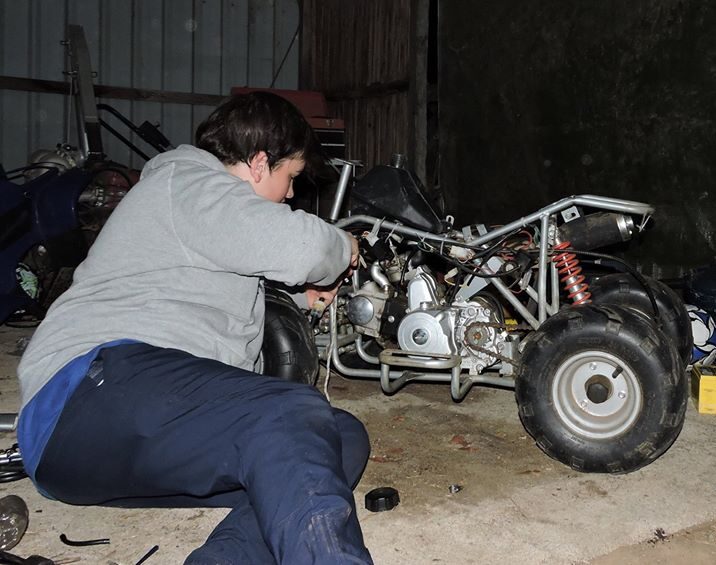
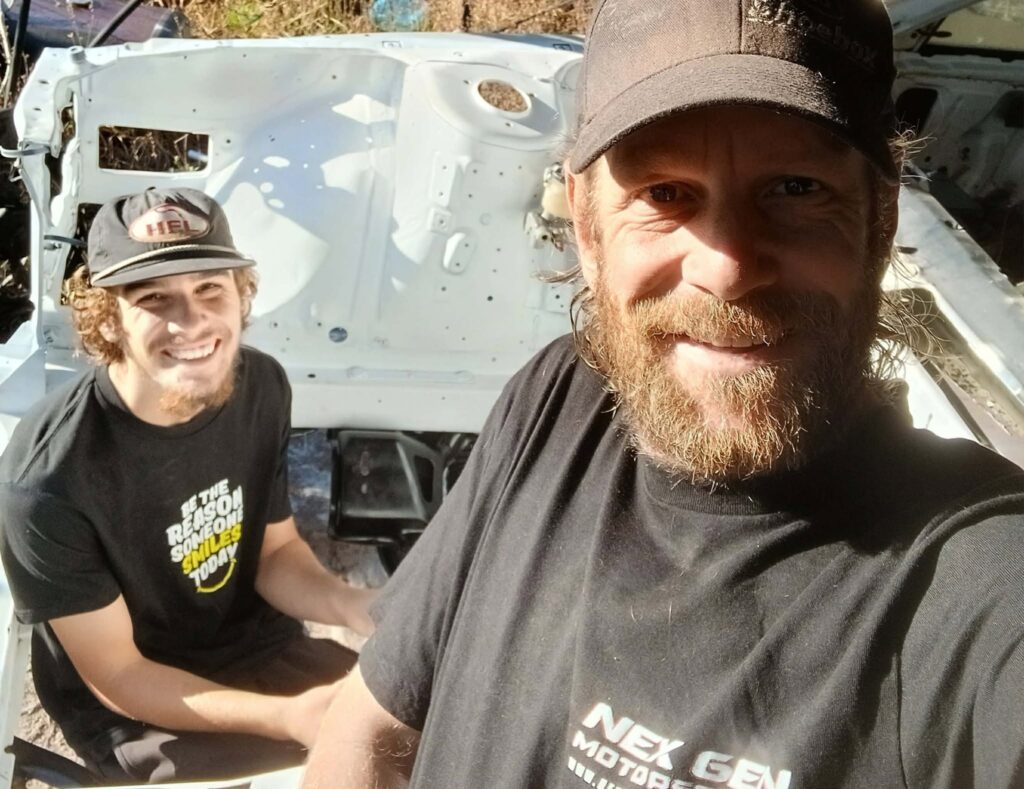
My car obsessed 6 year old that didn’t want to learn anything and just wanted to play with his cars and car mat is now 17 and has spent the past several years building a race car.
He’s created online businesses to attempt to live out his childhood dream, a career as a racing driver. There have been more challenges than I can even begin to articulate, but every day he gets out of bed and puts in the work to move one step forward, to learn a new skill, to overcome a problem, so he can live out his dream.
Would he ace a year 12 Maths or English exam? I don’t know, nor do I care.
He’s developed a love of learning and amassing knowledge, and has chosen a path toward a destination he values; that’s all that matters.
Many of the people who have engaged me for homeschool mentoring face struggles because they prioritise their children’s academic progress, resulting in chaos and conflict.
I think we all need to take a moment to stop and think about what we want our child to remember about their home education journey, and their relationship with us, their parents.
I believe it’s vital to do so.