How do we teach our kids things we know nothing about?
How can a single person impart the same knowledge as 20+ teachers who spend years studying?
We learn with them.
I’m not entirely sure why people believe a degree is required to educate children, but it’s an interesting concept to ponder. From primary school to university, teachers use plans, prompts and resources to ensure they meet the desired outcomes for a particular unit of study. A high school history teacher, for example, won’t remember every detail, nor be able to answer every question that may arise. Thus the need for resources.
There has never been a time in history when it’s been easier to access information. Want to learn to speak Japanese, study Japanese history, cook Japanese food, play Japanese music, or make some traditional Japanese clothing? There’s no need for a Japanese tutor, chef, musician, or Wasaishi (a Japanese Kimono maker). You can learn it all with a few clicks.
By embarking on these fact finding educational adventures with your children, you teach them the most valuable lesson of all. Nobody knows everything, but anybody can learn anything.
Simply answering “Oh good question, I don’t know, let’s go and see if we can find an answer!” normalises the idea that we won’t always have the answer, but more importantly, we can find one if we have the desire.
This often requires significant guidance when children are younger. However, if we model this behaviour, seeking out information and learning new skills becomes second nature as they get older. This creates a positive association to learning, it empowers them with the belief that they can learn anything if they set their mind to it.
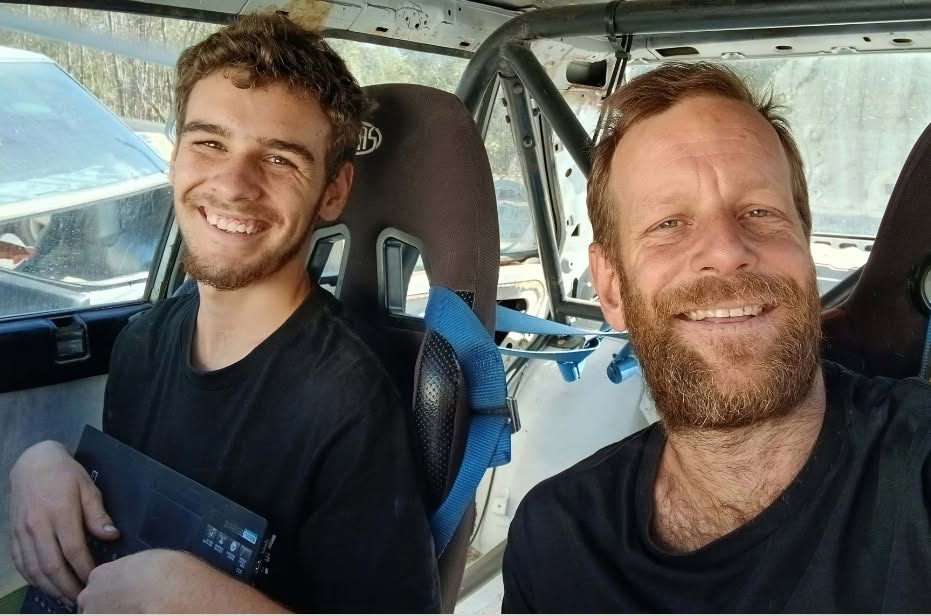
When Jaiden hatched his plan of building a race car, I had some mechanical knowledge, all of which I learned by seeking out information online. I still had no idea how to build a race car from a bare shell. Together we learned, developed new skills, and over the years Jaiden became better at seeking out information, problem solving, and bouncing back after setbacks.
After the crash that destroyed his beloved race car, he worked 7 days a week for 4 months to build another one. He hit the track for the first time, and the car had a major misfire. This meant he went home heartbroken, but determined to find the cause. After much research and learning, he connected to the car’s computer on his laptop and ruled out potential causes by checking critical sensor data. Eventually, he narrowed it down to a single part. Problem solved, new diagnostic process unlocked. If it occurs again in the future, he’ll know exactly how to diagnose it.
He understands that every question, problem, setback, or failure is an opportunity to learn and grow.
The aim is not to attempt to teach our children everything.
Instead, our goal is to help them realise there is no limit to what they can learn.